
Episode 29: Pali Lehohla

Kingsley Wheaton
I want to talk about the census.
Pali Lehohla
It gives you an understanding of people, generation after generation. The census becomes that liberating force. Unfortunately, in South Africa, only 36% of the population still believe in democracy. Once we have a 20 to 30% turnout in local government, democracy has collapsed.
Kingsley Wheaton
That's quite a statement.
Kingsley Wheaton
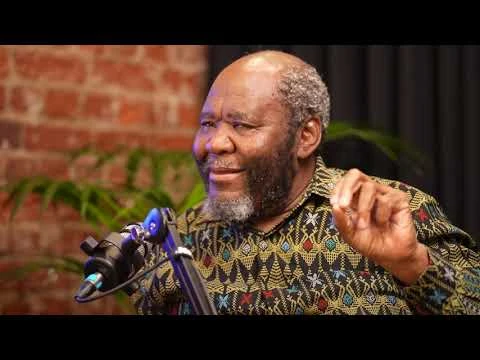
Welcome to the Smokeless Word filmed today in Cape Town, where I'm joined by Dr. Pali Lehohla, former Statistician General of South Africa and founder of the Pan African Institute of Evidence, we explore his remarkable journey from a humble upbringing in Lesotho to helping deliver South Africa's first democratic census, and his belief that data is not just technical but a force for trust, a force for accountability, and for progress. It's a conversation about the power and limits of evidence in shaping policy, including what happens when data on the factors fuelling South Africa's rampant illicit economy is ignored, and how greater respect for statistical truths could help build a better and fairer country and African continent. I hope you enjoy this episode. This podcast is intended for regulators, scientists, policymakers, and investors only. The views expressed in this podcast are the personal opinions of the speaker only. Any references to products having a reduced risk or reduced harm are based on the weight of evidence and assume no continued smoking. This material is not intended for U.S. audiences.
Kingsley Wheaton
Pali, huge welcome to the Smokeless Word Studio. Do you like it?
Pali Lehohla
Oh yes, I like the how the buildings have been converted.
Kingsley Wheaton
Yes, very yeah, yeah.
Pali Lehohla
The traditional look is held, but there's so much modernity in them, and you know.
Kingsley Wheaton
It's good. Just for the listeners, we're in a kind of workspace offices of an old conversion. I want to talk to you, Pali about lots of things today, but can I start with your upbringing? I think both your parents were teachers.
Pali Lehohla
Yes, indeed.
Kingsley Wheaton
And I wondered whether that was the influence or something else that drew you towards numbers and statistics. How did you grow that love for data and statistics and evidence?
Pali Lehohla
One of the things that are there that really I think brought me closer to numbers was the idea of Lesotho getting its independence, and the first thing that they had to do was the census in April, which is this month in 1966. And as the announcement of the census came. We had to go and exchange two calves for an ox, an African ox in the Free State. Well, Lesotho don't have 1000s of cattle. They could have about 30 40, but each one must have a name.
Kingsley Wheaton
Right.
Pali Lehohla
And then I named that ox census. It was a brother. Yes. And as I was looking at my father's memoirs more recently, he says, well, I was a numerator.
Kingsley Wheaton
Yeah,
Pali Lehohla
and I was covering this village where he was teaching,
Kingsley Wheaton
Yes.
Pali Lehohla
And he gives characterises what he observed in families from poverty, clean surroundings, and so on and so on.
Kingsley Wheaton
Yes, yes.
Pali Lehohla
So that connection, as I try to write my aide-mémoires, suggests that quite early on with the census, I was actually interested in numbers, but also growing as a son of a teacher, but also immersed in the struggles of the village. Yeah, meaning that we had fields, we ploughed and everything. I used to I used to like to go and observe how the crops were growing. I would be worried when it's too dry and the leaf breaks, and and so on and so.
Kingsley Wheaton
I want to talk about the census. So, you were the Statistician General, I think 1996. No, you led the census.
Pali Lehohla
I led the census in 1996. Mark Orkin was the head of the office at the time. I started in 2000.
Kingsley Wheaton
You started 2000. We have a very broad listener base. I mean, how how do you even do a census? I mean, let's start there. Simple. How how do you even think about a census.
Pali Lehohla
I think it starts with the philosophy of science, and science can be very empathetic. And in all endeavours, it appears that the scientists have been very empathetic. But how you study census, I think I have to. I may want to be philosophical about it, but I also have to be practical about it in terms of how do you run a census in your homeland like Bophuthatswana and then you have apartheid South Africa sitting there, and I just ran away from Lesotho, from the politics of Lesotho, and sought cover in Bophuthatswana. So, what do I get confronted with as a demographer? Here is the census of 1985, plan it! So, I look at the South African censuses. I say, but where are black people here? They're not there. They are not visible. They're just numbers. And I want to anchor this "just numbers" in the philosophy of economics, and economics as something that can only be cash, if you ignore space and if you ignore culture.
Kingsley Wheaton
Right. Yeah.
Pali Lehohla
So, when you look at black people reported in South Africa, there is no culture, there is no space. So therefore, there are the so-called economics, which is the so-called economics today. It is not cultural economic geography is stripped of that, and that's why we have this neoliberal system here. But you can see it in the census, and then in Bophuthatswana you find that it's only written sterilely, sterilely. And I didn't understand what was there.
Kingsley Wheaton
Was there resistance? Was there resistance to the census?
Pali Lehohla
No, there was no resistance. The idea of counting people and black ones was not to allocate them in their place names, which is the ontological origins of people. If you deprive them of their place name and to give reportage on those people on farms sterilely, and the publication is that one, that was my first objection when I planned the Bophuthatswana census.
Kingsley Wheaton
Yeah,
Pali Lehohla
So, I had to travel across, and the map is written farm names. Then you go to Supingstad, Kgosi Supin, or you go to Kgosi Muirwa Edinoka in Luruti. I'm having this map. It is written. What was the name of that farm now? I've forgotten it, but it was the name of a farm. I asked the villagers, "What is where is this place?” They said, "No, it's not, and you don't know it.”
Pali Lehohla 7:34
I get to the chief himself. I say, "Here it is on the map. It's written this way. Said, "No, no, no, it's not that thing you are talking about. This is Dinukan.” Now that opened my mind that apartheid concealed, deliberately, and you can see it on the road signs. You'll see little Debbie. You'll see little Costero. We see its names conspicuous on the road signs, but we will not see the names of Winterfeld as you drive into Joburg. Winterfeld, which had quite a number of people in it, or you wouldn't see the names of Soweto when you drive towards Joburg from distance. You see it when you get in there.
Kingsley Wheaton
Right.
Pali Lehohla
So the absence of place names, but even the introduction of derogative place names like Thabong and Nyakallong, which is the place of pleasure, and there's no pleasure there. So, you really have to study toponymy. You've got to study the origins of place names, so the census becomes that liberating force.
Kingsley Wheaton
Yeah, you said.
Pali Lehohla
To reveal the history of the city.
Kingsley Wheaton
You said, "I want to quote this to you. The 1996 census was labelled the Conduit of Peace. You said if the 94 elections were the bricks, then the census was the mortar that held the house of democracy together.
Pali Lehohla
Indeed,
Kingsley Wheaton
What do you, talk about that? How do you think about that?
Pali Lehohla
The census is an information base.
Kingsley Wheaton
Yeah,
Pali Lehohla
Because an information base describes and analyses. It's not only descriptive, but it is analytical. It gives you an understanding of people generation after generation. There are moments of joy. There are moments of pain. There are history. There are travels and everything. It's all in there in the census, and that is why it is a mortar. It is that which holds.
Kingsley Wheaton
Does it underpin democracy?
Pali Lehohla
It underpins democracy.
Kingsley Wheaton
Is it because?
Pali Lehohla
At the raw level, which is what the politicians do at most of the time, which is the raw level.
Kingsley Wheaton
Yeah,
Pali Lehohla
it's how many votes have I gotten? That's all they are interested in.
Kingsley Wheaton
Yeah,
Pali Lehohla
And how many seats will my party get? I remember General Holomisa when the elections of, what was it, the national election of, I was still in office then. So I was walking around. He said, "How many seats do I have?" So, I said, "According to this, you have X number of seats." And I think from there you went and looked at who will be in his? That's part of the interest, but the census also. Now I'm talking about General Holomisa, Patekile. Patekile was very interesting in his perception of the census. He said, "Why do you run this thing of yours in October? Why don't you run it in December?
Kingsley Wheaton
Yeah, yeah.
Pali Lehohla
Said you know you have to count people where they usually reside. Yeah, yeah. He said I see. So the calls are who come from the Eastern Cape don't reside in the Eastern Cape, so you count them in Joburg, and when they go home, they find that their services are smaller, lower because their population is in Joburg, so you reinforce apartheid. So, this is a very this was a very profound statement. So, the census is the mortar now. Again, the Khoi and the San, they said they didn't want to be counted because they are not.. because we are saying they are coloured, and I'm giving you the deeper thinking around this mortar. The problem we faced in 1996 was this: we had just gotten into democracy, and we had seen countries being torn apart by tribalism, ethnicity, and so on, or population in Musotho is a cause, and so on. So we had to face the reality that apartheid correctly got people by their population, not population group. They had the race, but they also had their their their ethnic or national nationalities. So Basotho, Zulu, Xhosa, and so on. There'll also be a language that we are faced with. Do we follow that part, which will say there are so many Zulu, so many Xhosa, so many this so many that. Is this not going to wreck the democracy that we have just built. This is where the mortar comes in. Will this thing that we have just created not fall apart on the basis of characterisation of ourselves?
Kingsley Wheaton
Can I talk about working with leaders, you bring it up there. Leaders who use evidence and data and statistics to inform decision making, and those who don't. What separates them?
Pali Lehohla
I'll talk about Manuel.
Kingsley Wheaton
Yeah,
Pali Lehohla
He was the minister responsible for us as Statistics of Africa, but only to the extent that he would have to sign my leave form, my performance, and ensure that I don't go wild. But he had nothing to do with the numbers. He kept to that line,
Kingsley Wheaton
Right?
Pali Lehohla
But we met every two weeks.
Kingsley Wheaton
Yeah,
Pali Lehohla
And part of the success of state, I say, is attributed to that kind of leader.
Kingsley Wheaton
Right, right.
Pali Lehohla
Who, when he saw us having done something wrong, he said, "Give me the phone. I want to tell Madiba that I'm resigning. Fortunately, the phone nobody brought the phone to him. He had left it in the office. We were in the boardroom, so all of us, Maria Ramos and others, sitting there for it was it was the most difficult meeting. After all that, at the end, he said, "Go back, come back, and then he asked Abba Omar, Ambassador Abba Omar, and we else, so that we sit down, deal with this issue of the numbers, because numbers can actually cripple the country.
Kingsley Wheaton
Yeah, sure.
Pali Lehohla
And then after the discussion, he had seen the risks of a young democracy thrown into the deep end because of numbers that would be useful.
Kingsley Wheaton
Exactly.
Pali Lehohla
So I'm giving the answer to the question: Who are the leaders who could respect the numbers?
Kingsley Wheaton
But how? Okay, some do.
Pali Lehohla
He could have created a scare and left office.
Kingsley Wheaton
Yes.
Pali Lehohla
And pointed to why he resigns.
Kingsley Wheaton
Yeah,
Pali Lehohla
Which would be. A good thing to do, but the consequences of that would have made the numbers never ever to be trusted.
Kingsley Wheaton
Yeah, at a period of at a fragility.
Pali Lehohla
At a period of fragility, but also at the period when actually the science was correct, revision was the correct thing, the methods were quite correct, but managing the correctness of the methods within a political environment where the experts have made a mistake, you could throw a bomb in there and let the whole house of cards burn.
Kingsley Wheaton
But I mean, you you would you would probably argue that data, statistics, technology, AI, you know, information is probably more than ever, and yet informed policy making, informed political decisions may well be the inverse of that.
Pali Lehohla
Oh, that's true. I'm coming to how, in the context of the African continent.
Kingsley Wheaton
Yeah.
Pali Lehohla
He played a very critical role to try and bring the idea to bear that unless we get this right, our democracy is not democracy and delivers democracy. So, he organised the session. Mangosuthu would tell us please Mangosuthu would tell us but tell us, we must value census and so on. We had a very good lunch around there, and then he had to now deal with this preliminary that differs from the final results. And Madiba's speech was saying, although the census numbers, the preliminary showed a lower turnout. The final results have proven the correctness and the scientific method of the statistics, which was indeed true. So that anchored us very well, but it also sent a warning to us as experts that we actually have to be sensitive to the politics. the environment, however correct the scientific method might be, but without changing the scientific method.
Kingsley Wheaton
Yeah. You also said, "I'm going to quote you. Without high quality statistical evidence, without appropriate indicators to communicate the evidence, without informed issue identification, informed policy action results, and without the statisticians themselves, the world does not have an information system for any form of development, let alone sustainable development." That's quite that's quite a statement, isn't it?
Pali Lehohla
It's quite profound, and in fact,
Kingsley Wheaton
It is quite profound.
Pali Lehohla
It's true, yet there is also 1% likelihood that the statisticians may have it wrong.
Kingsley Wheaton
Now you tell me.
Pali Lehohla
So that is why, in the engagement of this, we actually have to be modest, and we must be empathetic in the use of the numbers and appreciate them deeply. Unfortunately, in South Africa, we really don't have respect for numbers. That's the unfortunate part.
Kingsley Wheaton
And why? Why do you say in South Africa in that sentence?
Pali Lehohla
Well, I am talking about it because I can see how we lack respect when we actually have high quality data that we are not using.
Kingsley Wheaton
Okay.
Pali Lehohla
In other countries where there isn't data, there is nothing to say you are respecting because it doesn't just exist.
Kingsley Wheaton
Yes, yes, yes. Why is that? What's the? I want to get really to the heart of why is it not respected?
Pali Lehohla
I don't know whether it's political expediency. In part, it could be, and in the latter day, it is. We have a bureaucracy that doesn't have a clue around what it is that they are doing. The Department of Education, probably the DG there, and the Department of Finance and Minister of that and that and that Don't interconnect because the statistics is a flow, and you have to see this flow from beginning to end. But each one looks at with their oogklappe.
Kingsley Wheaton
Silos, silos.
Pali Lehohla
Silos, yes. So, you know, I sat there very very frustrated for all these years. I was Statistician General of a system that doesn't plan. Well, the period of Mandela and Thabo Mbeki, at least we had scenarios. And scenarios give you a sense of what is it is that you want to achieve and how you might want to achieve it. You may not have the technical wherewithal, which the government of Mbeki didn't have anyway. Neither did Madiba's, but because they had scenarios. They had a guiding principle.
Kingsley Wheaton
Yeah, a map.
Pali Lehohla
A map. Yes, that says we don't want to be in that scenario. I mean, Madiba was working with the Clem Sunter's scenarios of the the careers and the the the the march of the flamingos and and and all all that Thabo Mbeki had the future we have chosen and the memories of the future as scenarios, and they had very clear patterns of things they would reject. Subsequent to the departure of President Mbeki, there were no scenarios in government, none whatsoever. Up to this day, there are no scenarios. So, while they may not have had the technocracy that could be adequate, scenarios played a very crucial role in guiding those discussions because we had these discussions in cabinet around which scenarios are we? For instance, we are very clear that we are only Shosholoza scenario between 2002 to 2007. But after the ructions between President Mbeki and Msholozi and Hiva, then we knew that we will have a possibility of the future we chose, and in the future we chose there were no optimal scenarios; they were all worst case scenarios. And guess what? We fell on today. We fell on the worst case scenario, which is Muvhango . And in 2005, 2006, 2007, we said if we follow that scenario of Muvhango, the champ will slip up, not yet Uhuru, and all those things. And what we didn't have at the time were the names we could put to people who will be acting that way. Everything as articulated by the future we chose under the Muvhango scenario is at play now.
Kingsley Wheaton
And that scenario, that label Muvhango, what does it mean?
Pali Lehohla
Muvhango is a, Muvhango is a Venda word that means
Kingsley Wheaton
Yeah.
Pali Lehohla
The game game of mass of revolving door.
Kingsley Wheaton
Can I just, perhaps, through the lens of everything we've discussed, ask you about some issues that relate to us? I want to take you back to being the Statistician General. Is that the right expression? Cabinet, our business today, 75% of our marketplace is illicit, illegal, contraband. The evidence is is is clear. It's overwhelming. There is an enormous 30 billion rand loss to the fiscus, and there is a little bit of political awareness and maybe a little bit of political will, but the question is why can't policymakers enact change just based on that example? Never mind. I could give you lots of other examples. Why do they struggle to see data and evidence and then drive policy?
Pali Lehohla
Well, it is the classical use of a lamp by a drunkard for support rather than for enlightenment. That's what they do all the time.
Kingsley Wheaton
Yeah, yeah.
Pali Lehohla
And that is the serious problem.
Kingsley Wheaton
What would you have done about it though? Back then, you know, 2000, 2005. What would you have done? Do you bang the drum? Do you provide more evidence? Do you provide more? How do you get your argument across?
Pali Lehohla
You know, in 2001, we are looking at something called, that had to do with rural development and renewal and so on, but we didn't have the data then. And I showed when the data was available after 2001. I showed the cabinet where we went wrong that things that didn't need a lot of this were actually given a lot. You could see the response that the response at the time by the bureaucrats, then they responded to this evidence and did things differently.
Kingsley Wheaton
Right,
Pali Lehohla
That is why we saw growth at that rate and all that. These ones today, I've shown them evidence on how we actually. I was at the Higher Commission on Education, and one thing that Msholozi before he left said "pay for everyone", and my evidence was also saying pay for everyone, because by paying for everyone you speed people going through the the system rather than holding them back. Now how many don't get their certificates because they owe, and therefore they cannot move? So the system is constipated, and when you are constipated and you have no other passage, the stomach will burst. Similarly, in your industry, the stomach will burst, given that the illicit movement of these things with inferior products, with no accountability, and then you have to bear the brunt of the industry name for things that may go terribly wrong, which are not part of yourselves, and everybody and everybody is implicated. What is the message and what is the moral of the story?
Kingsley Wheaton
Yeah, what's the message?
Pali Lehohla
The moral of the story is this: If people who think correctly keep silence as their the cave of security against speaking out, they'll rot in that cave. That's the moral of the story. There is no escape. You will rot in the cave. So it is very, very important here where we are in South Africa, and where we are in South Africa. Let me say this: when I use these tools of the Lehohla ledger, which is now these things analyse in ways that you ever not never understand. There is a ratio of one to one. This ratio of one to one. I was just working on the last numbers of the Statistician General of the Labour Force Survey: 17.1 million people are employed, and the 17.1 million people are non economically not active. That I call the labour disappearance index. It doesn’t mean they are not there. They are there, but they're invisible.
Kingsley Wheaton
Yeah.
Pali Lehohla
In that area of labour disappearance index, which is 66% of South Africa, that's where democracy has collapsed, which is 66% of South Africa. The survey of the IEC through the through the Human Sciences Research Council, says only 36 people, 36% of the population still believe in democracy vis-à-vis 70% a number of years ago, 20 or more years ago.
They no longer believe in democracy, which means that the local government elections might have a turnout of about 20 to 30%. Once we have a 20 to 30% turnout in local government, with the current political parties, they'll transform themselves into warlords, and they'll tell those who didn't vote that you exercise your democracy. We have been voted. We are now in power. We decide, and they will exchange favours in a government of national unity, which then pretends that they are national unity, and they'll say the vote said we must be a government of national unity, and then they exchange favours, and they become Socrates' merchant politician.
Kingsley Wheaton
Merchant politicians
Pali Lehohla
Merchant politicians who trades who who trades with the plebiscite as commodities or cargo or merchandise, and they are also currency. That's what will happen. What we have to do now, and I'm using these instruments to be in the hands of students. You see, if you think about today, 2026, it's 50 years from 1976. We must ask the generation of 1976, which includes me, of course. I was in Lesotho, I was not in South Africa, but many South Africans, Phumzile Mlambo-Ngcuka, Tito Mboweni and all these guys who were prominent here. Were at the University of Lesotho with me. We are therefore, and I claim, I am a generation of 1976. What are we handing over to the generation of 2026?
Kingsley Wheaton
This is back to your intergenerational value.
Pali Lehohla
We are handing over a rotten carcass, and what are they going to hand over to the generation of 2076. That's the question we must ask ourselves. 100 years, a century. What does that century mean for South Africa? If we don't step out and think about this 1652, to 2152, which will be a millennium, which pivots on the 100 years, maybe, and just maybe, van Riebeeck might just revisit the Western Cape because it is only in the Western Cape where 70% of the population will be active in the election. In the rest of the country, it is going to be probably less than 30% in turnout. Democracy has collapsed. I'm not saying it's because democracy has succeeded in the Western Cape. It hasn't. You can't have Mitchells Plain with Cape Town as it is, it is that a different political dynamic is at play, but the economics of it are as bad as the rest of the country.
Kingsley Wheaton
But you, before we met, and I was reading statistics, your history, I had a sense that you might believe that logic could win an argument. I'm not sure. Two hours later, I don't think it's just logic. You don't see it that way, do you? That there's a there's a there's an evidence, a data, a logic, and yet there is also an emotion and a storytelling to convince, is that right?
Pali Lehohla
Oh yes. Without without advocacy, you can't do go far. Your numbers are your numbers. But yes, yeah. If you can't run. You see one of the things that I found myself in, and I'm sure you could have followed me, but probably you didn't see the other side of me. That in my job as a chief statistician, my responsibility is to produce the numbers and put them there, and there must be brokers who have to explain them to anybody. And that's a safe space.
Kingsley Wheaton
Yes,
Pali Lehohla
It's as flat as this one. You can dance here.
Kingsley Wheaton
Yeah, yeah.
Pali Lehohla
If it was a saw, you dance on the blade.
Kingsley Wheaton
Yeah, yeah, yeah.
Pali Lehohla
I tend the blade, so that I can dance on the serrated side, and still show that I may not lose some of the toes.
Kingsley Wheaton
Just before we wrap up, I've got a quick fire round for you, which is quite good fun. Are you ready? Yeah, I'm going to give you a choice. You have to choose one. You can't give me statistics back.
Pali Lehohla
What?
Kingsley Wheaton
I’m going to give you two words. You'll see it. It's very easy. It's like it's like a basic game. So here we go: home or holiday?
Pali Lehohla
Home, yes.
Kingsley Wheaton
Home, family, or work.
Pali Lehohla
How do you split that? Work!
Kingsley Wheaton
Work, TV or a good book?
Pali Lehohla
None of, a good book.
Kingsley Wheaton
A good book.
Pali Lehohla
Karl Marx.
Kingsley Wheaton
Time alone. I'll come back to
Pali Lehohla
I'll come back to Karl Marx.
Kingsley Wheaton
Time alone or time with friends.
Pali Lehohla
You know, I don't know. Probably time alone.
Kingsley Wheaton
Time alone. Okay. Final one. Statistics or storytelling?
Pali Lehohla
Storytelling.
Kingsley Wheaton
Storytelling. Interesting. Thank you very much for joining us. It's been my pleasure to talk to you. The insights have been amazing, and I look forward to meeting you again fairly soon.
Pali Lehohla
Thank you very much
These transcripts are AI-generated and may contain errors or inaccuracies and should not be relied upon.
Pali Lehohla, former Statistician-General of South Africa and founder of the Pan-African Institute of Evidence, joins us to discuss what the data reveals about the state of South Africa’s democracy - and why he believes the numbers now point to its collapse.
From apartheid’s deliberate erasure of Black communities to the historic 1996 Census, Pali breaks down the power of data. Today, he sees a different kind of erasure: evidence exists, but policymakers aren't listening to what it says.
Join Kingsley and Pali for a conversation on evidence, national progress and what the numbers really say about South Africa’s future.
Exclusive access to the Omni™ Newsletter
Join the conversation shaping A Better Tomorrow™. Sign up to receive exclusive access to the Omni™ Newsletter and future Omni™ updates.
Signing up to the Omni™ Newsletter does not constitute consent to receive marketing communications.