
Hazard and Risk

In toxicology, a hazard refers to the inherent ability of a substance or activity to cause harm. Hazard statements are designed to be clear and easily understood, but on their own they do not provide context about how much harm might occur in real life, or under what conditions. In simple terms, analysing a potential hazard asks: “Could this cause harm?”. Whereas analysing a risk asks: “How likely is harm to occur under actual foreseeable conditions of exposure?”.
A simple analogy to help visualise
HAZARD vs RISK

HAZARD
x

HIGH EXPOSURE
=
Higher exposure
- - -
Greater potential
to cause harm
- - -
Higher risk

HAZARD
x

REDUCED EXPOSURE
=
Hazard controlled
- - -
Reduced harm
- - -
Lower risk
In simple terms, analysing a potential hazard asks: “Could this cause harm?”. Whereas analysing a risk asks: “How likely is harm to occur under actual foreseeable conditions of exposure?”
A fundamental principle of toxicology, first articulated by Paracelsus over 500 years ago, is that “the dose makes the poison.” This means that whether a substance causes harm depends on the level and duration of exposure and not just its intrinsic properties. Hazard-based assessments do not account for this exposure dimension, and when hazards are communicated without context, they can lead to misunderstanding or overreaction.
Regulatory and public health bodies use hazard-based classifications to identify substances of concern and to inform policy decisions, including restrictions or bans. While hazard classification is important for identifying potentially dangerous toxic exposures, it does not by itself indicate whether common, low-level exposures lead to meaningful health risks.
As mentioned above, risk is the probability that an undesirable health effect will occur following exposure to a hazard, taking into account amount and duration of exposure and is hence more relevant than mere hazard identification. It requires consideration of several factors, including who is exposed, how much they are exposed to, how often exposure occurs, and whether certain groups may be more vulnerable than others to experiencing adverse effects from the exposure. Accurately characterising the risk means explaining these factors clearly, without overstating or minimising the potential for harm.
One important factor is the population exposed, including whether any groups may be more susceptible. For example, a chemical that can cause adverse developmental effects in a foetus is particularly relevant to pregnant women or women of childbearing age. If a hazard is relevant to one specific group, this does not necessarily mean the same level of concern applies to the wider population. Clear public health communication should therefore explain both who may be at increased risk and why.
A second important factor is whether there is an exposure threshold for toxic effects. Some substances only cause harm above a certain level of exposure. Below that threshold, the body may be able to tolerate or manage the exposure without adverse effects. For example, many chemicals may be hazardous at higher doses but pose little or no meaningful risk at very low levels of exposure. For hazards where no clear threshold exists, risk assessment becomes more complex. In these cases, very low exposures may still be associated with a theoretical risk, but that risk may or may not be so small that it is considered negligible or acceptable in practice.
This raises an important question: what level of risk is acceptable? The answer often depends on context, including the expected benefits of the product or activity that gives rise to the exposure at issue and available alternatives to those products or activities.
Factors for Analysing Risk
1
Consider the population exposed, including whether any groups may be more susceptible.
2
Is there an exposure threshold for toxic effects?
3
What is the level of exposure?
A third factor is the level of exposure. Understanding the relationship between level of exposure and response is central to toxicology. Increasing exposure to a hazardous substance usually increases the likelihood or severity of harm. This dose-response relationship is central to determining whether a hazard is likely to translate into real-world risk. For example, an occupational worker repeatedly exposed to a substance at high levels faces a higher risk profile than a consumer exposed occasionally to very low levels of the same substance.
A fourth factor is the importance of realistic exposure scenarios. Risk assessment must reflect how people actually use products or encounter substances in daily life. This requires an understanding of consumer behaviour, product use patterns, and foreseeable misuse. For example, exposure from normal product use may be low, but risk assessors may also need to consider whether some users could use a product more frequently, differently, or in ways that increase exposure. This makes risk assessment scientifically challenging, but it is essential for understanding real-world impacts.
Relative Risk and Absolute Risk
Risk is often communicated using either relative risk or absolute risk. Both are useful, but they answer different questions.
Relative risk describes how much more or less likely an outcome is in one group compared with another. For example, a study may report that a certain exposure is associated with a “70% increase” in a particular health outcome.
This can sound alarming, but relative risk does not show how common the outcome is to begin with. Absolute risk describes the actual chance of an outcome occurring. It provides the real-world probability of harm occurring for an individual and so is often more helpful for understanding individual impact.
This distinction is critical for balanced communication. Relative risk can help identify whether an exposure is associated with increased harm or decreased harm, but absolute risk helps explain the scale of that harm in practical terms. Using both measures along with crucial data, indicating how common the particular exposure is among the population, provides a clearer and more proportionate understanding of real-world health impacts.
Long-term population experience from the Nordic countries provides an important real-world perspective on both relative and absolute risk. In Sweden, and to a lesser extent Norway, smokeless tobacco products such as snus have been used for decades, including among individuals whose tobacco use began with Smokeless Products rather than cigarettes. This unique population experience, supported by extensive epidemiological and public health datasets, provides valuable insights into the health effects associated with long-term use of smokeless tobacco products in their own right, as well as in comparison with cigarette smoking[19].
Consequently, the Nordic evidence base contributes to understanding both the potential harm reduction benefits for smokers and the absolute risks associated with use across the wider population.
Dose Makes the Poison
Paracelsus (Switzerland, 1493 – 1541)
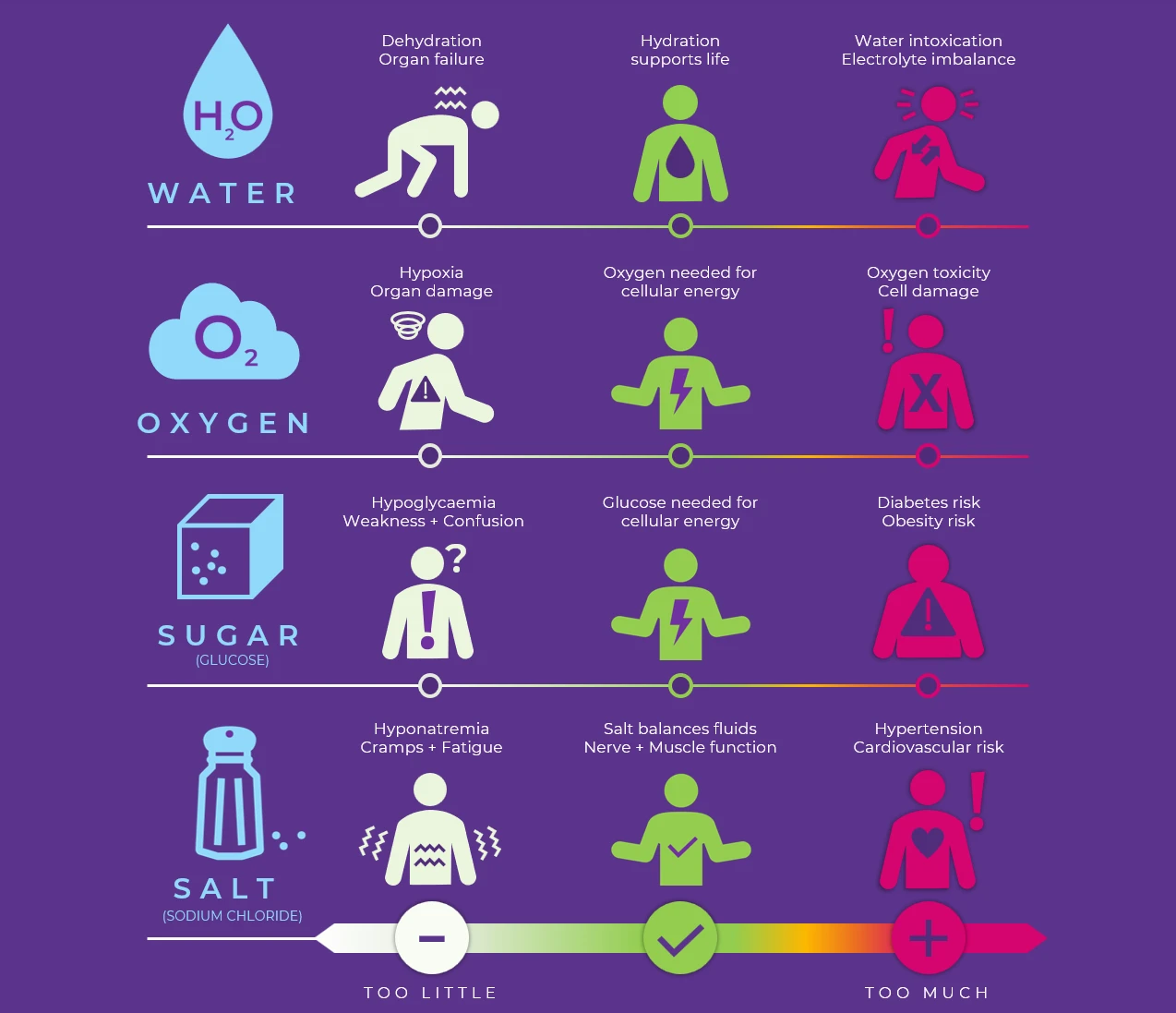
The father of toxicology, Paracelsus, formulated the principle that “the dose makes the poison”, meaning that substances are not inherently harmful or beneficial; it is the amount of exposure that determines their effect. This principle applies even to substances essential for life, such as water, oxygen, glucose, and salt.
Conclusion
Hazard and risk are both essential concepts in toxicology, but they should not be confused. “Hazard” identifies what has the potential to cause harm. “Risk” assesses how likely that harm is to occur under real-world conditions. Risk therefore depends on identification of a hazard, exposure, duration, total dose, population susceptibility, and context.
Focusing only on hazard can overstate concern and may lead to disproportionate responses. Incorporating risk, including both relative and absolute measures, provides a more accurate and balanced view of potential health impacts. Effective public health communication should therefore explain not only what a substance or activity can do theoretically, but also the level of risk of causing harm at realistic levels of exposure. This distinction is fundamental to informed decision-making, proportionate regulation, and meaningful public health communication.
Footnotes
* Based on the weight of evidence and assuming a complete switch from cigarette smoking. These products are not risk free and are addictive.
† Products sold in the U.S., including Vuse, Velo, Grizzly, Kodiak, and Camel Snus, are subject to FDA regulation and no reduced-risk claims will be made as to these products without agency clearance.
References
A full list of references for this page can be found in the section 11. References.

Exclusive access to the Omni™ Newsletter
Join the conversation shaping A Better Tomorrow™. Sign up to receive exclusive access to the Omni™ Newsletter and future Omni™ updates.
Signing up to the Omni™ Newsletter does not constitute consent to receive marketing communications.