
Big Question 4 - What Steps is BAT Taking to Market its Products Responsibly and Prevent Underage Access?
KEY SUMMARY POINTS
01
No one under the permitted legal age should use tobacco or nicotine products.
02
Tobacco and nicotine products are for adults only and our marketing is targeted to adult tobacco and nicotine consumers only.
03
Technology and innovation can play a role to further prevent underage access and usage.
“Preventing underage access to nicotine products is both a public policy priority and a shared responsibility across the entire value chain. At BAT, we support a balanced, evidence-based regulatory framework that ensures that nicotine products are sold only to adults, strengthens age verification and retail accountability, and equips authorities with effective enforcement tools..”
Gary Tarrant
Group Head of Regulatory and Fiscal Affairs
Underage access is a critical issue facing the industry. At BAT, our position is clear: no underage person should be able to access or use tobacco or nicotine products.
As we drive towards our vision to Build a Smokeless World by advancing Tobacco Harm Reduction, preventing underage access and appeal remains a top priority. That is why we continue to actively identify, implement and support solutions that protect the underaged, while enabling access to less risky*† alternatives for adult smokers.
Our efforts to prevent underage access and appeal are underpinned by four key principles:
- Prohibiting Underage Use – Outlaw the sale and use of tobacco and nicotine products by and to underage individuals.
- Responsible Marketing – Specific targeting of adult consumers through considered advertising and marketing.
- Responsible Retailing – Deploying retailer programs and age verification mechanisms at the point of purchase or delivery.
- Harnessing Technology – Working with affiliates to design and implement technologies with features to prevent underage use and access.
Prohibiting Underage Use Through Legislation
The first laws establishing a minimum age of legal access to tobacco products began to appear across the U.S. in the 1880s[1], and in the UK in 1908[2]. As decades passed, these age restrictions evolved in parallel with the wider landscape of tobacco-related science, information, and policy, arriving at the contemporary national minimum ages of 21 in the U.S. and 18 in the UK.
BAT fully supports laws and regulations that prohibit the sale of tobacco and nicotine products to anyone under the legal minimum age, including the adoption of a minimum legal age of 18 when none exists.
We call for proportionate regulation to be accompanied by effective enforcement, with meaningful penalties for non-compliance where necessary, robust retailer accountability measures, and initiatives that help authorities prevent underage sales.
Alongside legislation, various initiatives including educational resources, retailer programmes and public awareness campaigns can play an important role in helping reduce underage access and use.
Responsible Marketing: Product Appeal
Our approach to marketing is one of the key methods we use to address underage access and use. Wherever we operate, we are guided by our Responsible Marketing Principles (RMP)[3] and Responsible Marketing Code (RMC)[4] to ensure that we market our products responsibly, accurately and target adult smokers. This is central to our values and crucial to our vision of Building a Smokeless World.
Within these guidelines are various provisions focused on addressing underage access. These, among other requirements, require that any material advertising or promoting our products must:
- Be targeted to adult tobacco and nicotine consumers
- Feature only adults
- Only appear in publications or on digital channels for which the audience is predominantly adult
- Not appear in close proximity to areas primarily occupied by the underaged
The RMC applies to our brands and products, covering all elements of marketing from product design to sales. Our RMP and RMC are also underpinned by detailed guidelines and toolkits to help ensure they are applied consistently[3],[4].We maintain a robust material review and approval process to ensure that labelling, advertising, marketing, and promotional materials conform to these standards. In addition, employees are trained on the importance of our commitment to effective underage access prevention (UAP).
Responsible Retailing: Product Access
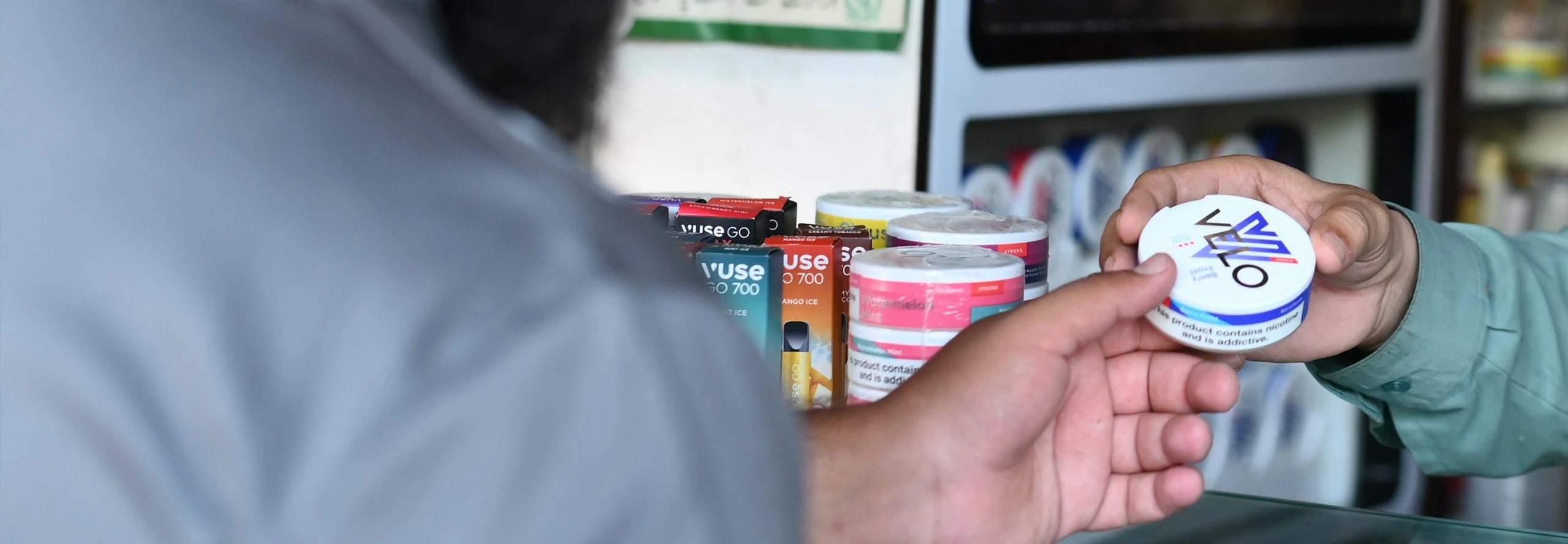
We have UAP and age verification programmes in place to help prevent our products from being accessed by or sold to anyone underage, whether through BAT or any third-party that we work with.
In the U.S., we were founding sponsors of the We Card™ programme, a national non-profit organisation with almost 30 years of expertise, that provides education, training and point-of-sale resources to help retailers comply with federal and state laws, while limiting underage access to age-restricted products[5]. We have also partnered with the National Association of Convenience Stores and Conexxus, an organisation focused on the development of standards and innovative technologies for retailers, to support access to and use of TruAge™, a digital solution that enhances current age-verification systems, while protecting consumer privacy [6]. This age-verification programme is free to retailers to assist them in compliance with our contractual age verification requirements to restrict underage access to our products at the point of sale.
As technology evolves, so too do the opportunities to strengthen age-verification controls. Potential future solutions include retail licensing and enhanced facial recognition technologies. We continue to work collaboratively with our partners to identify and implement, where possible, practical and effective solutions.
Harnessing Technology
We believe that technology has an important role to play in enhancing retail controls and addressing underage access and usage at a product level.
A notable advancement for Europe is the introduction of the EU ID Digital Wallet and the European Age Verification App, a privacy-preserving solution that enables retailers to verify customers’ ages efficiently and securely, without storing personal data. These apps have already been explored in countries such as Greece, setting a benchmark for responsible retailing.
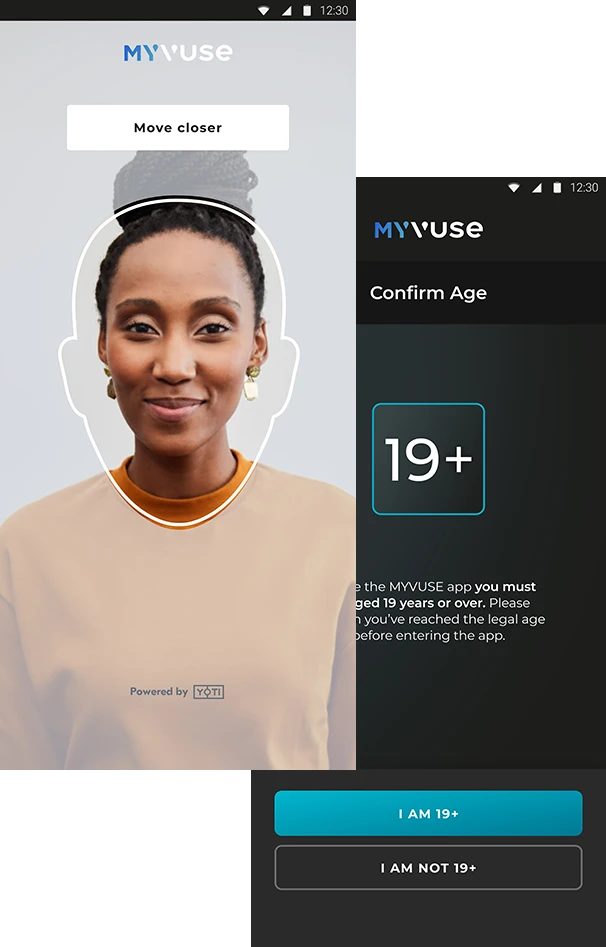
AT BAT, we have launched age estimation technology pilots using Yoti a digital identity and age assurance solutions provider across seven markets, enabling more than 38,000 age checks to date. These are active in more than 1,100 outlets, across retail, BAT owned channels, and on some of our e commerce platforms, helping to raise standards across all of our Smokeless Product categories. Early results show the strong potential of age assurance tools to prevent underage access, while supporting harm reduction goals through purpose driven innovation.
Across our markets, we work with retailers to implement robust age verification technologies at the point of sale, including digital ID scanners and biometric solutions where possible. This is reinforced through ongoing compliance monitoring which allows retailers to audit sales and confirm that age restrictions are consistently enforced. Retail staff also receive training to use age verification tools effectively and to understand the importance of adhering to these requirements.
When it comes to product technology specifically, we believe there’s real potential to address the concerns surrounding underage access.
The U.S. Food and Drug Administration (FDA) has also acknowledged these technology-enabled opportunities, stating that device access restrictions would be considered among the ‘mitigation efforts that aim to reduce the risk of underage initiation and tobacco use[4].’ In the language surrounding these comments, it is clear that the FDA has been contemplating control strategies related to both age and identity.
While many consumer electronic devices can currently identify and verify users through things like facial recognition, fingerprints or other biometrics, there are some challenges.
At present, there is no economical, practical, self-contained way to first verify age, then ensure ongoing access control solely via a device. This means that products need to rely on external systems, like an app or database, for example, to manage age and identity verification.
To address this challenge, we are working with our affiliates to consider and develop future product applications which will combine advanced device features, such as device authentication and access controls, with effective retail solutions. This integrated approach strengthens safeguards against unauthorised use, creating multiple layers of protection throughout the adult consumer’s journey, from purchase to ongoing use. The technology is being considered, but we also recognise and will consider the impact that implementation of any potential changes could have on adult smokers.
Ultimately, we have a vision for Underage Access Prevention which would see an electronic Smokeless Product platform with a connected ecosystem, bringing together the product/device, the adult consumer’s phone or tablet, and their age-verified account.
To conclude, keeping tobacco and nicotine products out of the hands of the underaged requires a collective approach, supported by proportionate regulation and robust enforcement.
We believe faster progress can be achieved through progressive, multi-stakeholder solutions grounded in Tobacco Harm Reduction and real-world evidence, and we remain committed to playing our part to Build a Smokeless World.
Case Study: Vuse Ultra and MyVuse
In 2025, we launched Vuse Ultra, our most premium and advanced vaping product. With Bluetooth® connectivity to the MyVuse App, Vuse Ultra provides adult consumers with superior personalisation of their vaping experience within a modern and stylish device.
Through MyVuse, we set about to create an advanced and connected experience, with adult consumers at the heart of every decision. A key consideration in the design of the app and device, as with all of our products, was preventing underage access. With Vuse and MyVuse we designed and implemented a number of controls with this in mind, including:
- Device unlocking exclusively managed through a secure mobile application, ensuring only authorised users gain access.
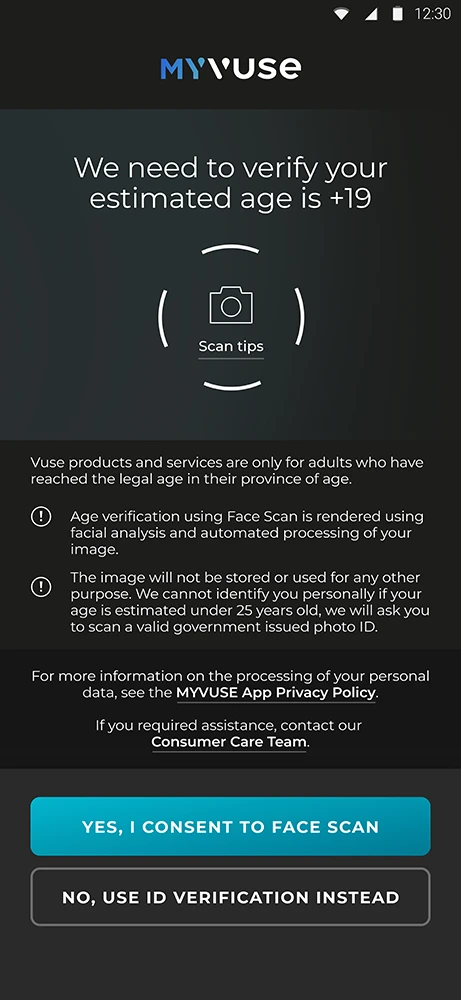
- Application access requires a valid account, which is verified through stringent age verification processes.
- Accounts are activated only after successful completion of age verification, using methods such as digital ID scanning or biometric authentication.
- The device incorporates a time-and proximity-based ‘AutoLock’ feature, maintaining continuous control and preventing unauthorised sustained use. The ‘AutoLock’ mechanism remains invisible to age-verified users after initial setup, as it stays unlocked when regularly in range of their phone.
- Pods designed for this device are incompatible with legacy, non-age-verified devices, further preventing misuse.
Footnotes
* Based on the weight of evidence and assuming a complete switch from cigarette smoking. These products are not risk free and are addictive.
† Products sold in the U.S., including Vuse, Velo, Grizzly, Kodiak, and Camel Snus, are subject to FDA regulation and no reduced-risk claims will be made as to these products without agency clearance.
References
A full list of references for this page can be found in the section 11. References.

Exclusive access to the Omni™ Newsletter
Join the conversation shaping A Better Tomorrow™. Sign up to receive exclusive access to the Omni™ Newsletter and future Omni™ updates.
Signing up to the Omni™ Newsletter does not constitute consent to receive marketing communications.