
Big Question 5 - What is the Risk of Using Smokeless Products Compared to Smoking?

KEY SUMMARY POINTS
01
Scientific evidence confirms that Smokeless Products emit fewer and lower levels of harmful chemicals than cigarettes.
02
Fewer and lower levels of harmful chemicals in Smokeless Product emissions are associated with lower consumer exposure compared to smoking.
03
While Smokeless Products have a lower risk*† profile than smoking, they are not risk free.
“Combusted, or smoked, tobacco products (such as cigarettes) are the most harmful type of tobacco product. Non-combusted products (such as e-cigarettes and other smokeless tobacco products) generally have lower health risks than cigarettes and other combustible tobacco products.”
US FDA, 2025[1]
The Omni™ summarises the public health impact of smoking in Chapter 3, and the scientific evidence behind our Smokeless Products in Chapter 4.
In terms of epidemiology (the study and analysis of the distribution, patterns and determinants of health and disease conditions in a defined population), we know that when people smoke cigarettes, their risk of smoking-related diseases increases. While quitting is beneficial at any age, people who quit smoking by age 40 will largely see their relative risks of smoking-related disease return to those of ‘never smokers’[2]. We also know that while Smokeless Products are not risk free, people who use them have a disease risk level substantially lower than that of adult smokers.

A Continuum of Risk
Scientific research has demonstrated that Smokeless Products produce fewer and lower levels of harmful chemicals, compared to cigarettes, and expose Smokeless Product consumers to lower levels of harmful chemicals, compared to smoking. We have built a ‘weight of evidence’ for each category
- Heated Products, Vapour Products, Oral Tobacco Products and Oral Nicotine Pouches
- based on the scientific assessment of emissions (what comes out of the product), exposure (what consumers take in) and potential comparative health risks at both an individual and population level.
A seminal study was conducted by Professor David Nutt using an international expert panel convened by the Independent Scientific Committee on Drugs that developed a multi-criteria decision analysis model of the relative importance of different types of harm related to the use of nicotine-containing products[3].
Different types of tobacco and nicotine products were then placed on a continuum of risk relative to cigarettes (the most risky form of tobacco use) and cessation (the measure that most effectively avoids harm from tobacco or nicotine use) (Figure 1). The U.S. FDA has similarly recognised such a continuum of risk, noting the importance of making the public aware that: “The available scientific evidence indicates that tobacco products exist on a continuum of risk, with cigarettes being the most harmful[4].”
Evidence used to position tobacco and nicotine products on the continuum of risk primarily comes from analyses of toxicant emissions and resulting exposure. These assessments help us better understand the potential comparative risk profiles of different products.
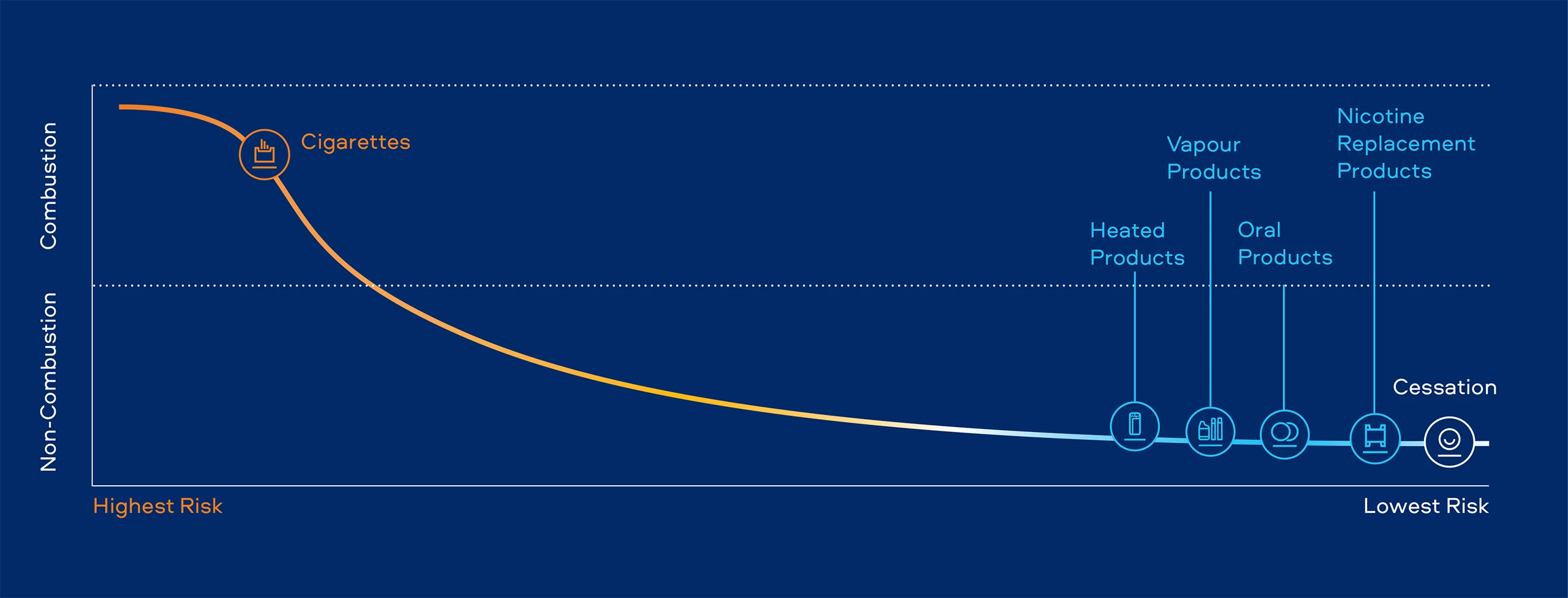
Figure 1. A model continuum of risk of tobacco and nicotine products.
Reduction in Toxicant Exposure From Smokeless Products
While toxicant emissions are not entirely eliminated in Smokeless Products, BAT’s evaluations of its Smokeless Products show reductions in emissions of nine priority harmful components that the World Health Organization recommends to reduce in cigarette smoke[5]. In our Smokeless Products, levels of these nine harmful components are reduced, on average, by 90-95% for Heated Products[6], 99% for Vapour Products[7], and >99% for Oral Nicotine Pouches[8], compared with cigarette smoke. Further studies demonstrate substantial reductions in exposure to selected toxicants among smokers who completely switch to Smokeless Products, with reductions in exposure reaching 95-99% of those achieved through complete cessation of tobacco and nicotine product use[9].
Independent assessments have also supported conclusions that Smokeless Products, such as Vapour Products, Heated Products, and Oral Nicotine Pouches, expose users to far fewer toxicants and at substantially lower levels than cigarettes.
Multiple expert reviews have reported that Vapour Products and Heated Products generate aerosols containing significantly fewer harmful and potentially harmful constituents (HPHCs) than cigarette smoke. Several bodies, including the UK Committee on Toxicity[10], the UK Office of Health Improvement and Disparities (OHID; formerly Public Health England)[11], the U.S. FDA[12], the German Federal Institute for Risk Assessment[13], the Superior Health Council of Belgium[14], the Dutch National Institute for Public Health and the Environment[15], the French National Agency for Food, Environmental and Occupational Health and Safety[16], and various academic groups, have concluded that the Heated Products and Vapour Products evaluated produce emissions containing markedly lower levels of carcinogens and other toxicants than cigarette smoke.
At the same time, these institutions emphasised important considerations: while toxicant exposure is substantially lower, reduced exposure does not equate to zero risk, and health risks remain, particularly for non-smokers, youth, and dual users. They also highlighted the need for long-term research and the importance of avoiding unintended consequences, such as initiation among non-smokers. Collectively, the consensus shows that although switching completely to Smokeless Products can significantly reduce toxicant exposure compared to continued smoking, they should be approached with appropriate caution, transparent communication, and continued scientific scrutiny.
Independent Assessments on the Risk of Using Smokeless Products Compared to Smoking
Clinical risk studies conducted by BAT focus on biomarkers that reflect unfavourable changes within the body associated with smoking and the development of smoking-related diseases. The biomarkers of potential harm (BoPH) studied are impacted by smoking and show improvement following smoking cessation. BAT’s clinical studies demonstrate improvements in these BoPH towards levels observed with smoking cessation among those who completely switch to Smokeless Products[17],[18],[19],[20]. While early evidence is promising, a full understanding of the long-term impact of switching will require more time to observe the effects at both the individual and population levels.
“The growing evidence shows that smoke free products (SFPs), including e cigarettes, heated tobacco products, and oral nicotine pouches, expose users to significantly fewer numbers and lower concentrations of toxicants relative to combustible cigarettes. In vitro studies and biomarkers of harm in SFP users suggest that these lower emissions translate to reduced risks of harm. It is the nature of science that the evidence will never be complete, but the totality of data should be considered when discussing the correct handling of SFPs.”
Niessner, R. 2025[21]
Several prominent government and academic institutions have opined that while Smokeless Products such as Vapour and Heated Products are addictive and not risk free, they are likely to be substantially less harmful than continued smoking, with multiple national health bodies concluding that switching completely from combustible cigarettes can significantly reduce health risks compared with continued smoking. Institutions such as the Royal College of Physicians (UK) have concluded that the risks of e-cigarettes are only a small fraction of those associated with smoking[22]. This view has been echoed internationally by academic experts in New Zealand[23] and repeatedly reaffirmed by the UK Office of Health Improvement and Disparities (OHID; formerly Public Health England)[24], which has emphasised that completely switching from smoking to vaping confers substantial health benefits compared with continued smoking, while recognising that residual risk remains.
Similarly, regulatory and scientific bodies, including the UK Committee on Toxicity[25], the Institute for Public Health and the Environment[15], and the Government of Canada[26], have concluded that replacing cigarette use with regulated Vapour Products or Heated Products is likely to reduce overall tobacco-related harm.
These assessments consistently underscore that reductions in toxicant exposure and disease risk associated with Smokeless Products meaningfully contribute to Tobacco Harm Reduction when such products replace smoking rather than supplement it[27]. In contrast, the World Health Organization (WHO) has repeatedly opposed Tobacco Harm Reduction strategies, maintaining that Smokeless Products should be regulated stringently and treated similarly to combustible tobacco products, rather than recognising them as occupying different positions along a risk continuum. The WHO’s position papers stress concerns that claims of reduced risk may undermine tobacco control efforts, while independent analyses, including those published in The Lancet[28], have criticised the WHO’s stance as overlooking risk-proportionate approaches that could benefit smokers who would not otherwise quit smoking.
The Future
As the science evolves, new clinical and population-level assessment methodologies will further advance our understanding of the impact of Smokeless Products on disease-relevant risk and harm reduction.
Footnotes
* Based on the weight of evidence and assuming a complete switch from cigarette smoking. These products are not risk free and are addictive.
† Products sold in the U.S., including Vuse, Velo, Grizzly, Kodiak, and Camel Snus, are subject to FDA regulation and no reduced-risk claims will be made as to these products without agency clearance.
Reference
A full list of references for this page can be found in the section 11. References.

Exclusive access to the Omni™ Newsletter
Join the conversation shaping A Better Tomorrow™. Sign up to receive exclusive access to the Omni™ Newsletter and future Omni™ updates.
Signing up to the Omni™ Newsletter does not constitute consent to receive marketing communications.