Big Question 6 - What is the Risk of Using Smokeless Products Compared to Smoking?

KEY SUMMARY POINTS
01
Scientific evidence confirms that Smokeless Products emit fewer and lower levels of harmful chemicals than cigarettes.
02
Fewer and lower levels of harmful chemicals in Smokeless Product emissions means lower levels of exposure for consumers, compared to smoking.
03
While Smokeless Products have a lower risk profile than smoking, they are not risk free.
"I’m fully aware of the misperceptions that are out there and aren’t consistent with the known science. We do know that e-cigarettes – as a general class – have markedly less risk than a combustible cigarette."
Dr Brian King
Director, Center for Tobacco Products, FDA [1]
The Omni™ summarises the public health impact of smoking in Chapter 3, and the scientific evidence behind our Smokeless Products in Chapter 4.
In terms of epidemiology (the study and analysis of the distribution, patterns and determinants of health and disease conditions in a defined population), we know that when people smoke cigarettes, their risk of smoking-related diseases increases. While quitting is beneficial at any age, people who quit smoking by age 40 will largely see their relative risks of smoking-related disease return to those of 'never smokers'.[2] We also know that while oral smokeless tobacco products are not risk free, people who use them have a disease risk level substantially lower than that of adult smokers.

A continuum of risk
Scientific research has demonstrated that Smokeless Products produce fewer and lower levels of harmful chemicals, compared to cigarettes, and expose Smokeless Product consumers to lower levels of harmful chemicals, compared to smoking. We have built a ‘weight of evidence’ for each category - Heated Products, Oral Nicotine Pouches, Oral Tobacco Products and Vapour Products - based on the scientific assessment of emissions (what comes out of the product), exposure (what consumers take in) and potential comparative health risks at both an individual and population level.
A seminal study was conducted by Professor David Nutt using an international expert panel convened by the Independent Scientific Committee on Drugs that developed a multicriteria decision analysis model of the relative importance of different types of harm related to the use of nicotine-containing products.[3] Different types of tobacco and nicotine products were then placed on a continuum of risk relative to cigarettes (the most risky form of tobacco use) and cessation (the measure that most effectively avoids harm from tobacco or nicotine use), Figure 1. The U.S. FDA has similarly recognised such a continuum of risk, noting the importance of making the public aware that: “The available scientific evidence indicates that tobacco products exist on a continuum of risk, with cigarettes being the most harmful.”[4]
The future
As the relevant science evolves, new clinical and population assessment methodologies will further advance our knowledge, to give us even deeper insights into the impact of Smokeless Products on disease-relevant harm reduction.
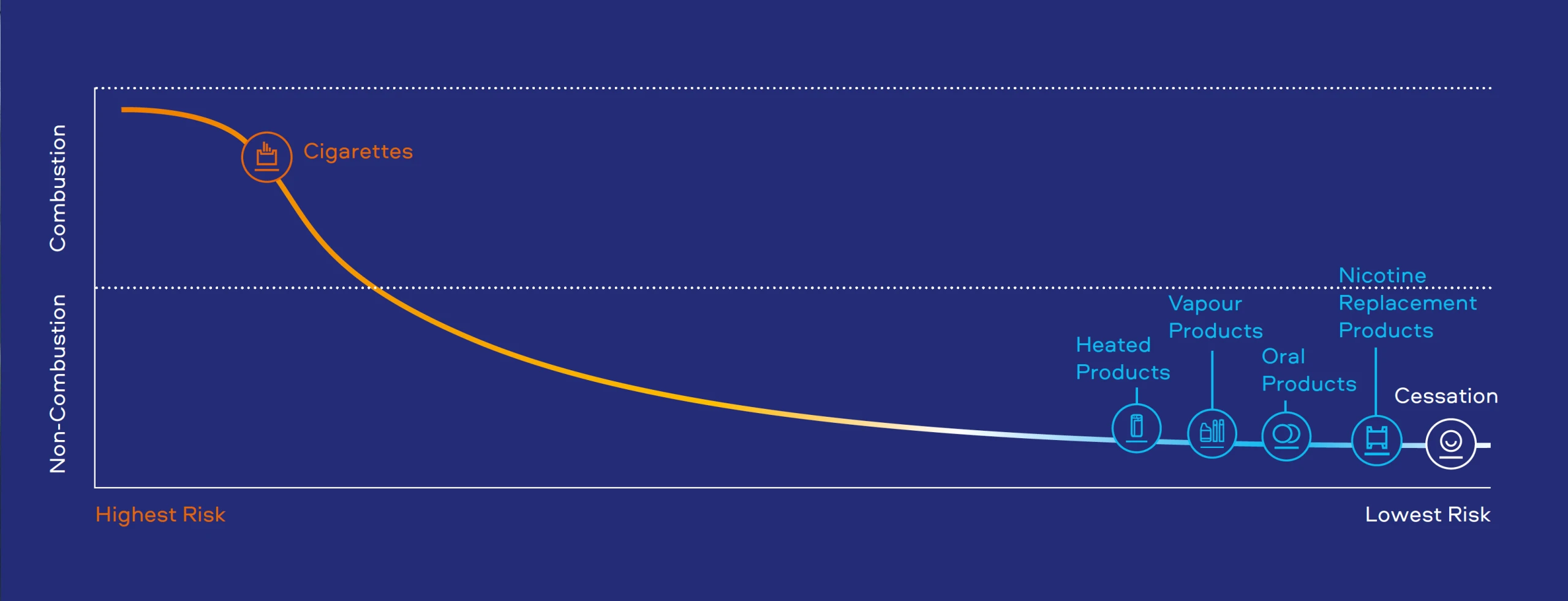
Figure 1. A model continuum of risk of tobacco and nicotine products
THR Evidence: Global Perspectives
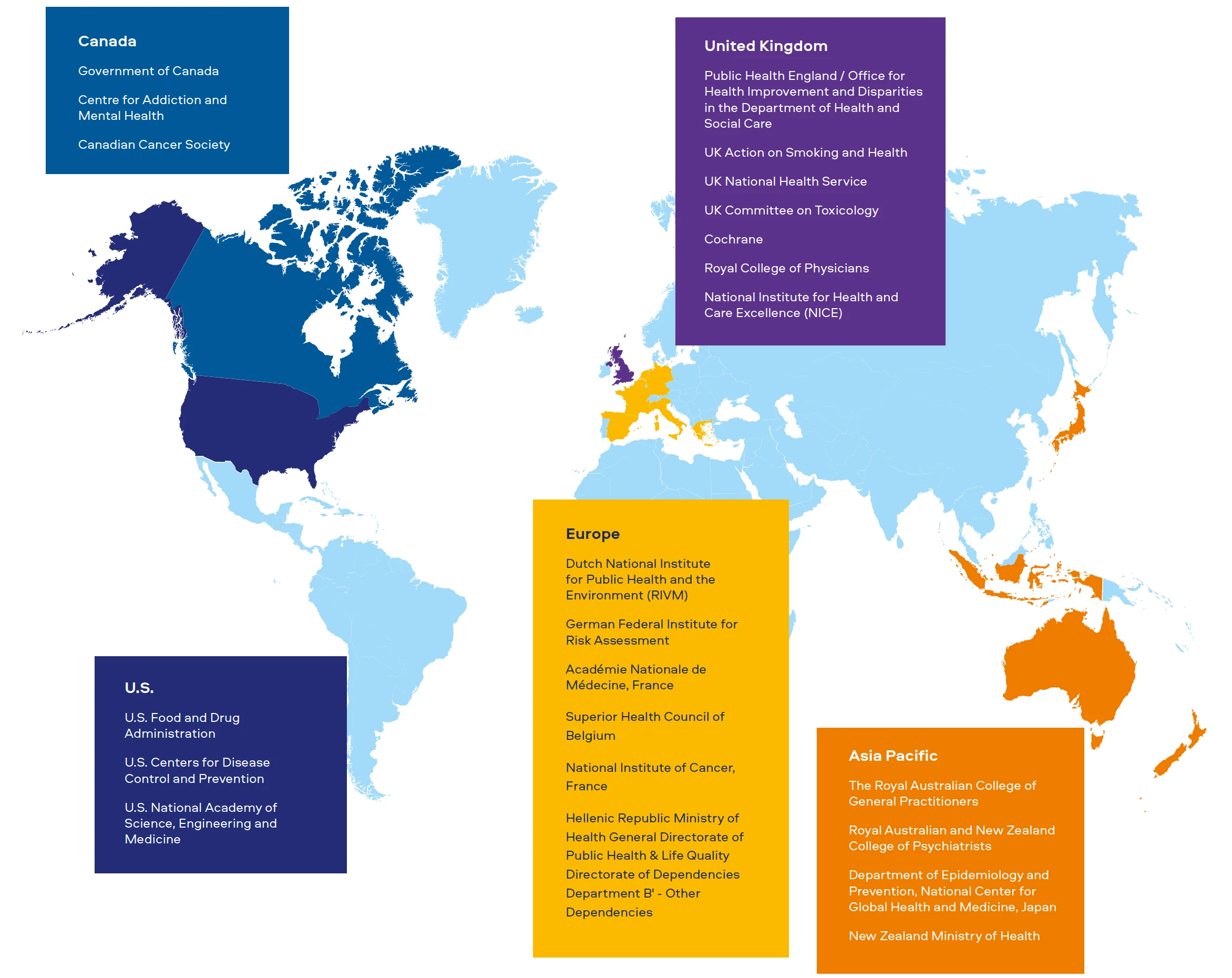
Stakeholders including regulators, public health Care Excellence (NICE) and academic researchers have published studies and opinion pieces on Tobacco Harm Reduction (THR). This summary provides a snapshot into global 3rd party scientists' views on THR.
- 2014 - 2016
- 2017 - 2018
- 2019 - 2020
- 2021 - 2022
- 2023 - 2024
Reference
[1] AP news, Insider Q&A: FDA official on vaping’s “promise or peril”. 2022. (Accessed: 17 July 2024)
[4] U.S. Food & Drug Administration, CTP Director Discusses Opportunities and Considerations for Addressing Misperceptions About the Relative Risks of Tobacco Products Among Adults Who Smoke. 2023. (Accessed: 8 August 2024)
[6] McNeill, A., et al., E-cigarettes: an evidence update. Public Health England, 2015. (Accessed: 8 August 2024)
[9] Royal College of Physicians, Nicotine without smoke: tobacco harm reduction. RCP, 2016.
[12] Public Health England, Evidence review of e-cigarettes and heated tobacco products 2018: executive summary. 2018. (Accessed: 18 July 2024)
[18] U.S. Food & Drug Administration, FDA permits sale of IQOS Tobacco Heating System through premarket tobacco product application pathway. 2019. (Accessed: 18 July 2024)
[19] Public Health England, Vaping in England: 2020 evidence update summary. 2020. (Accessed: 18 July 2024)
[23] U.S. Food & Drug Administration, FDA Authorizes Marketing of IQOS Tobacco Heating System with ‘Reduced Exposure’ Information. 2020. (Accessed: 18 July 2024)
[24] Government of Canada, Regulatory Impact Analysis Statement. 2021. (Accessed: 18 July 2024)
[25] German Federal Institute for Risk Assessment (BFR), Frequently asked questions about e-cigarettes. 2020. (Accessed: 19 July 2024)
[26] Action on Smoking and Health (ASH), Electronic Cigarettes Fact Sheet. 2021. (Accessed: 5 August 2024)
[27] National Institute for Health and Care Excellence (NICE), Tobacco: preventing uptake, promoting quitting and treating dependence (NG209). 2021. (Accessed: 23 July 2024)
[30] U.S. Food & Drug Administration. FDA Permits Marketing of E-Cigarette Products, Marking First Authorization of Its Kind by the Agency. 2021. (Accessed: 18 July 2024)
[36] Office for Health Improvement & Disparities, Nicotine vaping in England: 2022 evidence update summary. Gov. UK, 2022. (Accessed: 18 July 2024)
[38] U.S Food & Drug Administration, FDA Issues Marketing Decisions on Vuse Vibe and Vuse Ciro E-Cigarette Products. 2022. (Accessed: 18 July 2024)
[41] BAT Announcement, ΕΠΙΣΤΗΜΟΝΙΚΗ ΑΠΟΦΑΣΗ ΓΙΑ ΤΟ glo™ neo classic tobacco. 2023. (Accessed: 26 July 2024)
[42] PMI Science, Greek Ministry of Health approves differentiated health claims for heated tobacco products, including THS. 2023. (Accessed: 24 July 2024)
[43] The Royal Australian & New Zealand College of Psychiatrists, E-cigarettes and vaporisers. 2023.
[44] U.S. Food & Drug Administration, Facts about E-Cigarettes. 2023. (Accessed: 24 July 2024)
[45] Institut National Du Cancer, Cigarettes électroniques : ce qu’il faut savoir. 2023. (Accessed: 24 July 2024)
[46] Government of Canada, Vaping and quitting smoking. 2023. (Accessed: 19 July 2024)
[47] U.K. National Health Service (NHS), Vaping to quit smoking. (Accessed: 19 July 2024)
[48] Royal College of Physicians, E-cigarettes and harm reduction: An evidence review. RCP, 2024.
[50] U.S. Centers for Disease Control and Prevention (CDC), Health Effects of Vaping. 2024. (Accessed: 24 July 2024)
[53] Vaping Facts, Our position on vaping. Ministry of Health New Zealand. (Accessed: 19 July 2024)
[55] Canadian Cancer Society, Tobacco Control. (Accessed: 19 July 2024)